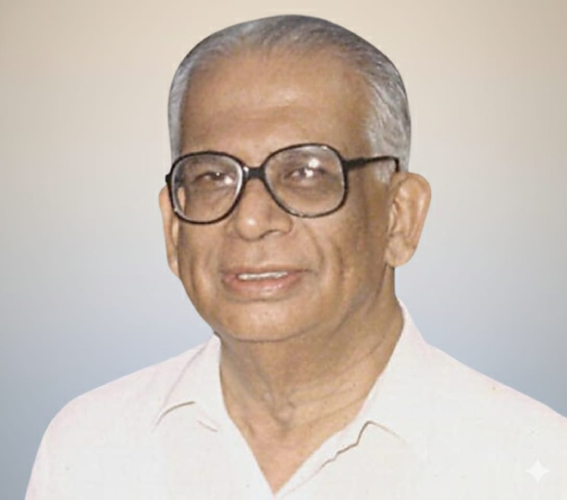
Dr. H. S. Bhat
(1921-2010)
Hattangadi Shashidhar Bhat was born to Dr.A.R Bhat-Surgeon to the British army and Ratna Baipi on 21st January 1921 in the town of Udipi near Mangalore. He was the eldest son among seven siblings. He was inspired to follow in his fathers footsteps seeing his commitment to patients, attending to them across deserst on camels.
Those were days when general anesthesia was not very popular. He always said that if he didn’t make it as a doctor-he would be a Historian.Throughout his life he had a brilliant memory for History-both world and Indian. His early schooling was in Udipi, where his grand-father-a teacher- was convinced that the most suitable and ambitious career he could ever pursue was that of a school peon!! Having lost his father very earlyhis family experienced immense financial difficulties, he used to walk 15 miles morning and evening to reach school. No money could be spent on public transport!!. He soon found his calling and joined Stanley Medical college and completed his MBBS from 1940- 1945 during the second world war. He used to often say that his children were privileged, because he had to manage all his expenses within the 25 Rs/month his widowed mother could manage for him. There were times his Professor Dr.C.Raghavachari used to provide him aid to tide over crisis that were not rare! He completed his MS general Surgery from CMC Vellore and stayed on to later establish the Urology Department. In the interim period between Gen Surgery and urology he spent years in ENT,OBG, Anaesthesia, Orthopedics, hand surgery under Dr.Brand, and neurosurgery with Dr.Chandy!
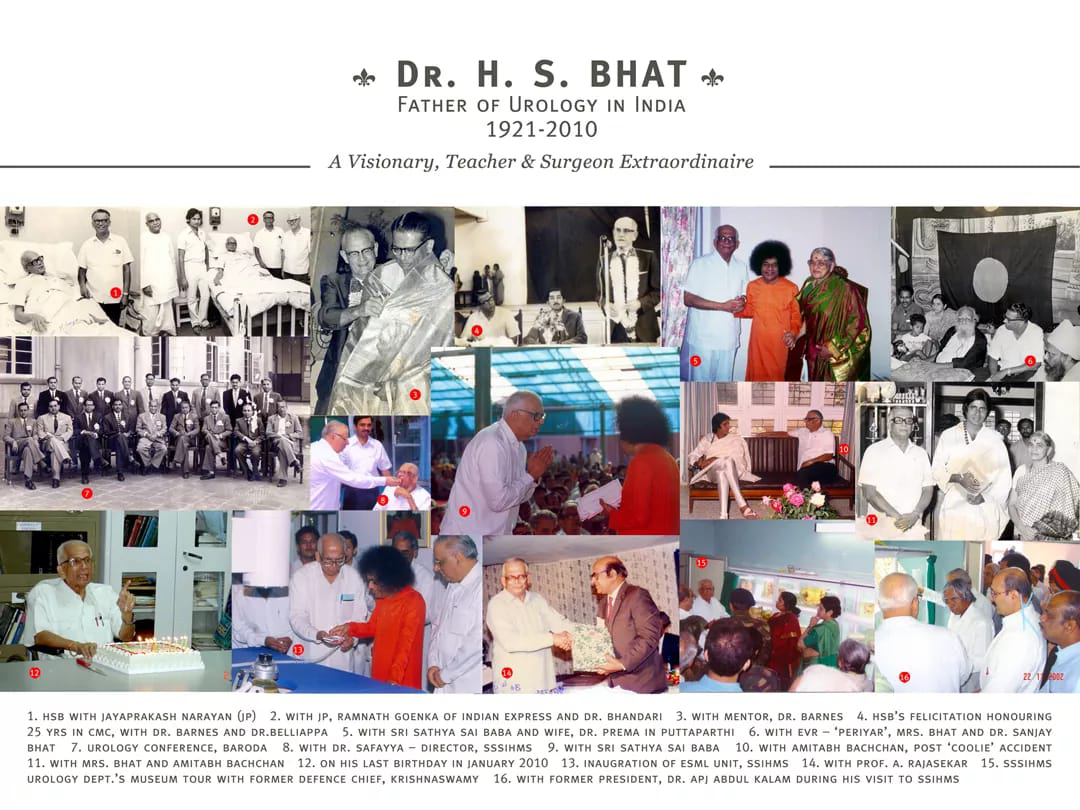
His colleagues who did medicine at the same time were the Great Prof. B.Ramamurthy(BRM), prof. Vishwanathan, Prof.A.Venugopal, Prof.T.J.Cherian (TJC), Dr.Sunadaraman among others. The teachers who were his role models and gave him the push first to surgery and then on to Urology were Prof.C.Raghavachari, Prof. Sommerwell, Prof.J.C.Carmen and Prof.Barnes. The latter 2 were his mentors who made him master TURP in the 1950’s and early 60’s and set up the first department in India to start MCh course in Urology in 1965. It is with their guidance and the support from his urology friends (Drs.Phadke,Arthur Desa, T.S.Jeyaraman, Collabawalla, Karanjiawalla, A.Venugopal) that the 1st All India Urology Conference was held in CMC Vellore in 1971.
In 1953 a young beautiful medical graduate from CMC met with a near fatal accident and was under the care of Prof. Sommerwell for comminuted fracture femur and dislocation of the hip. Dr.H.S.Bhat was the surgeons assistant. There was romance in the air and Prema and HSB were married on 20th December 1953. Their 4 children-all four delivered by Caesarian section. After the 1st two, the Obstetrician backed out! But the couple had decided on 4 so switched the doctor!
His compassion and empathy towards patients, devotion to his students, understanding of Urology and seminal work on GUTB, Giant hydronephrosis and large ureters led him to be called as a teacher of teachers. He literally trained all the Urologists who later became giants in the field and eminent teachers themselves.They disseminated Urology throughout the length and breadth of the the country always trying to emulate their teacher. The included Drs, Mohan Rao, Venugopal, Mathur, Rowthray,Ranganath Rao, Vasanth Krishna, Sampath Kumar, Annamalai, Rajashekaran, Chinnaswamy, Kandaswami, Ganesh Gopalakrishnan, AP Pandey amongst others. They set up MCh centers all over the country. He was the last Urologist to deliver the Himadri Sarkar Oration at the Annual conference of the Association of Surgeons of India. He received the coveted B C Roy eminent teacher award. He was the designated surgeon to the President of India and chief minister of Tamil Nadu. He treated eminent personalities like Jayprakash Narain, Karunanidhi, Ramasamy Periyar, Ramnath Goenka and many more also developed a close friendship with him.
After 3 decades in CMC Vellore , he rtired and settled in Bangalore and practiced Urologyat a catholic Mission Hospital (St.Philominas) in Bangalore. He brought the concept of Urology as a speciality to Karnataka. During this period he was called upon literally to save the life of Cinema legend Amitab Bacchan who was injured during shooting of the film “ coolie” during which he ruptured his small bowel during a fight sequence. He had a personal friendship with Bachan who visited him at his home whenever possible.
In 1978 he came in contact with Sri Sathya Sai Baba and became a close disciple and the too developed a mutual admiration. In 1992 Baba gave him the oportunity to continue his mission in life towards poor patients when the SSSIHM hospital was established in Puttaparthy. He closed his practice overnight and moved with Prema to Puttaparthy. He always wanted to work in a medical Institution where patients would be treated without the latter ever having to worry about the money he could bring along. He did not want that treatment options were decided by the patients financial capability but by his clinical condition. The SSSIHMS provided him the opportunity to live his dream. He established the Urology Dept in the rural setting and added his passion of combining academics with it. 18 batches of DNB urology students graduated from SSSIHMS under his guidance. He even managed to set up a museum that always excited him. There was no greater joy he felt than the time he spent with his patients and his students, almost to the envy of his children. The strength behind all this was his wife,who allowed him to be the invisible father to his children, while he was allowed to live out his passion in the hospital.
There was a time when the Government informed him of a padma award, but somewhere there was a slip between the words uttered and the final communication. For him the greatest recognition was the affection and respect he got from students and patients. After nearly 7 decades practicing medicine he passed away on 19th November 2010. The Family has institutde the H S Bhat symposium during the annual conference of the Urology society of India in his memory. The H S Bhat oration during the annual conference of the Association of Southern Urologist is delivered every year by eminent faculties and from 2013 onwards the Annual midterm workshop of the ASU has been instituted in his memory and will be conducted around his death anniversary every year.
(Courtesy Dr. H. Sanjay Bhat)
Dr. H. S. Asopa
(1932-2023)
Dr. Hari Shankar Asopa was well known not only in India but all over the world for his expertise in reconstructive surgery, especially in the field of hypospadias and stricture urethra. He was extremely popular among the patients and the public as a kind and humanitarian doctor. He was sympathetic to poor and downtrodden people of his region and served many poor patients by providing them free treatment.
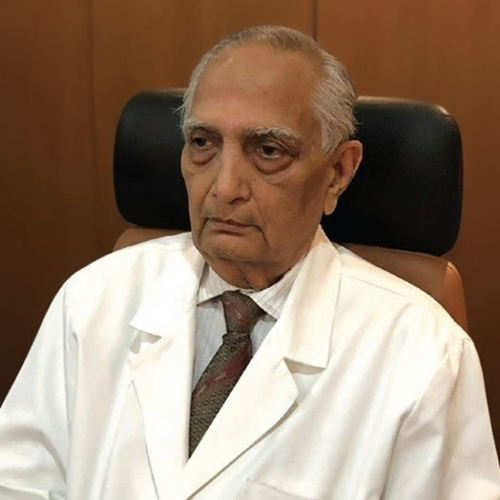
Born in July 1932, Prof. Hari Shankar Asopa graduated from S N Medical College, Agra, with a brilliant career. He stood first in Agra University (including Agra, Gwalior, and Indore Medical Colleges at that time) with several gold medals including the Chancellor’s Medal. He did his MS Surgery (Agra), FRCS (England), and FRCS (Edinburgh) all in 1964, and joined the faculty of SN Medical College, Agra, the same year. Later, he joined as Professor and Head of the Department of Surgery at MLB Medical College, Jhansi, as the youngest Professor and Head of the Department of Surgery at that time. Thereafter, he was Professor Emeritus at SN Medical College, Agra. He was a very popular and respected teacher. He continued his teaching interest by training post-MS doctors and running a postgraduate course of DNB in Surgery and Family Medicine accredited by the National Board of Examinations.
He invented a one-stage operation for hypospadias. One in every 250–300 boys are born with this defect, about 40,000 boys are born every year with this defect in India alone. This procedure, known as the Asopa operation, was soon being done all over the world by urologists, pediatric surgeons, and plastic and general surgeons. Asopa procedure found a place in articles, international journals, international references, and textbooks.
In 1984, he published another operation for hypospadias titled “One Stage Repair of Hypospadias Using Foreskin Tube” which was a refinement of the original Asopa operation and is called Asopa II operation and was later described in textbooks as Asopa Procedure 1990 Version.
An operation invented by Dr. Asopa in the mid-1990s for stricture urethra is being followed universally by urologists worldwide and has made urethral stricture surgery easy and safe to perform. It has been popularized among Reconstructive Urologists in Europe and America as “Dorsal Inlay Urethroplasty” or “Asopa Technique.” Numerous articles have been written by urologists around the world recognizing this technique as a major advancement in urethroplasty and its high success rate.
Dr. Asopa was invited to give talks on his operations in numerous national and international conferences. Lectures and videos of his intricate surgeries are shown in international conferences and on websites. He demonstrated these operations at workshops in over 50 institutions and preconference workshops in India and abroad, where hundreds of general surgeons, plastic surgeons, pediatric surgeons, and urologists benefited.
Dr. Asopa was awarded many prizes, memberships, and fellowships including Col. Pandalai Oration in 1991, the most prestigious award of the Association of Surgeons of India. He received the “Dr. B. C. Roy National Award” as Eminent Medical Teacher in 1991. He was again awarded the “Dr. B. C. Roy National Award” as Eminent Medical Man for the year 1996, both by the then Presidents of India. This award is given once a year to a medical man out of all medical faculty and disciplines in the country. He was awarded Honorary DSc by Dr. B R Ambedkar University, Agra, in 1995.
Prof. Asopa served as National President of the Association of Surgeons of India in 1996. He was invited to be the Founder and President of the International Society of Hypospadias and Intersex Disorders. This society awards the “Asopa Lecture” to eminent international authorities in its Biennial Conference.
He was honored with “Hunterian Professorship” by the Royal College of Surgeons of England in 1997, a rare honor for any Indian doctor. He received Col. Sangam Lal Oration and Gen. Amir Chand Oration, both by the National Academy of Medical Sciences of India, and the Asian Society of Pediatric Urology Oration in 2000 for outstanding contribution to pediatric urology. He was awarded fellowship of the National Academy of Medical Sciences, New Delhi, by Dr. Man mohan Singh (Former Prime Minister of India).
Prof. Asopa was widely known for his gentle behavior, benevolence, and sympathetic attitude toward the weaker sections of society and was honored by various societies and social organizations, including a Vishesh Sammaan Patra (special commemoration letter) in 1988 from then Chief Minister of Rajasthan Shri Shiv Charan Mathur.
This noble soul left for his heavenly abode on November 21, 2023. He is survived by his wife Mrs. Vimla Asopa, sons Dr. Ravi Asopa, a urologist settled in Melbourne, Australia, Dr. Jyoti Asopa, a family physician who is the director of the Asopa Hospital, and daughter Dr. Archana Asopa Nishchal, settled in New York, USA.
( Courtesy Dr Madhu Sudan Agarwal)
Prof. Dr. P. Venugopal
(1940-2023)
There are two types of teachers – one, who enters the spaces available for teaching to teach and the other, who creates spaces for learning. Professor P. Venugopal belongs to the second category. Not only did he start an independent urology department offering an MCh course in urology in a private medical college way back in 1977, an incredible feat at that time, which became a premier institute in India but also helped in commissioning another two, which are very well established, imparting superspecialty training in urology. For the next five and a half decades, he breathed and lived urology, earning him the title of an indefatigable teacher!
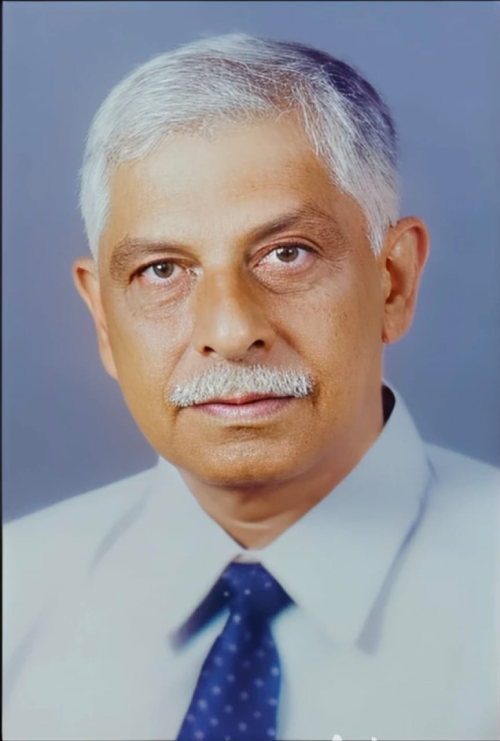
Born on February 14, 1940, he obtained an MBBS degree in December of 1961 from Medical College, Pondicherry, followed by MS (General Surgery) in 1966 from Medical College, Trivandrum. He trained in urology at the Christian Medical College, Vellore, under Professor H S Bhat, the doyen of Indian Urology, and obtained the MCh degree in 1968. The MCh (Urology) training started by him at the Kasturba Medical College (KMC), Manipal, is the first-ever higher training program in the state of Karnataka. The department had 116 beds, a laboratory for urodynamics, an extracorporeal shock wave lithotripsy suite, a dedicated ultrasound facility, four operation theaters, and an independent seminar room and library.[2] His abiding interest in pediatric urology, kindled during his Senior Commonwealth Fellowship at Newcastle upon Tyne in the UK (1970–71), drove him to develop and nurture pediatric urology service, in addition to all the subspecialties in Urology. After his premature retirement in 1993, he helped to start two more teaching units, one at JNM College, Belagavi, and one at KMC Hospital, Mangaluru. It was during the COVID-19 pandemic that he chose to teach exclusively online, which he continued relentlessly till his last breath.
Professor Venugopal has worn many hats to serve the Urological Society of India (USI). He was a member of the USI since its inception and held all the positions of the society except that of the secretary, and he holds the record for being the youngest to become the President. The annual conference of the USI organized by him in 1982 was unprecedented in quality and conduct. He delivered the prestigious Himadri Sarkar Oration in 1986 on “Large Ureters,” a term he was fond of for wide ureters, and this work remains unpublished save what was released by the USI during the conference. His 10 commandments of ureteric reimplantation were excerpted from this and published in a manual released during the 9th annual conference of the Urological Association of Kerala (UAKON) in 1995.
He was instrumental in starting the Indian Journal of Urology (IJU) during his tenure as the President of the USI (1984). After a long stint as a Treasurer of the IJU (1984–1992), he served as the Chairman of the Editorial Committee for 8 years (1992–2000). It was providential grace that he could witness the Journal getting its first-ever impact factor earlier this year. He was a regular contributor to the IJU and his last article in the journal dealt with gender-based differences in the Indian urological workforce.
His wife, Professor Nalini Venugopal, was an eminent Uropathologist and a well-known teacher. He was devastated by her sudden illness, which compelled him to learn the use of a computer in search for a remedy. After her demise, he busied himself learning urology all over again from the Internet. He saw an opportunity to learn and teach virtually. Thereafter, he was ubiquity on the web platforms, namely, uroeducation@yahoogroups.com, uroeducation.org and https://uroacademy.org. He would often say that education can be democratized and delivered to every aspirant student through the web, and every teacher should utilize web platforms to teach and learn.
“Once a teacher, always a student” used to be the mantra he would tell himself. During his active years, he created many spaces for learning. Of these, the department founded by him at Manipal is a standing monument for him. Four more second-generation teaching departments were commissioned by his students later. In his twilight years, he learned and taught incessantly. Uroacademy created by his grateful students is an e-classroom in honor of him. He taught here till his last few days. After five decades of tireless service to urological education in India, he left the material coil on July 31, 2023, to merge with the elements. There are few who could hold on to one’s subject so steadfastly and continue to teach as he could. He was indeed an indefatigable teacher!
( Courtesy Dr. G. G. Laxman Prabhu)